
Kitchen Layout Mistakes That Hurt Function
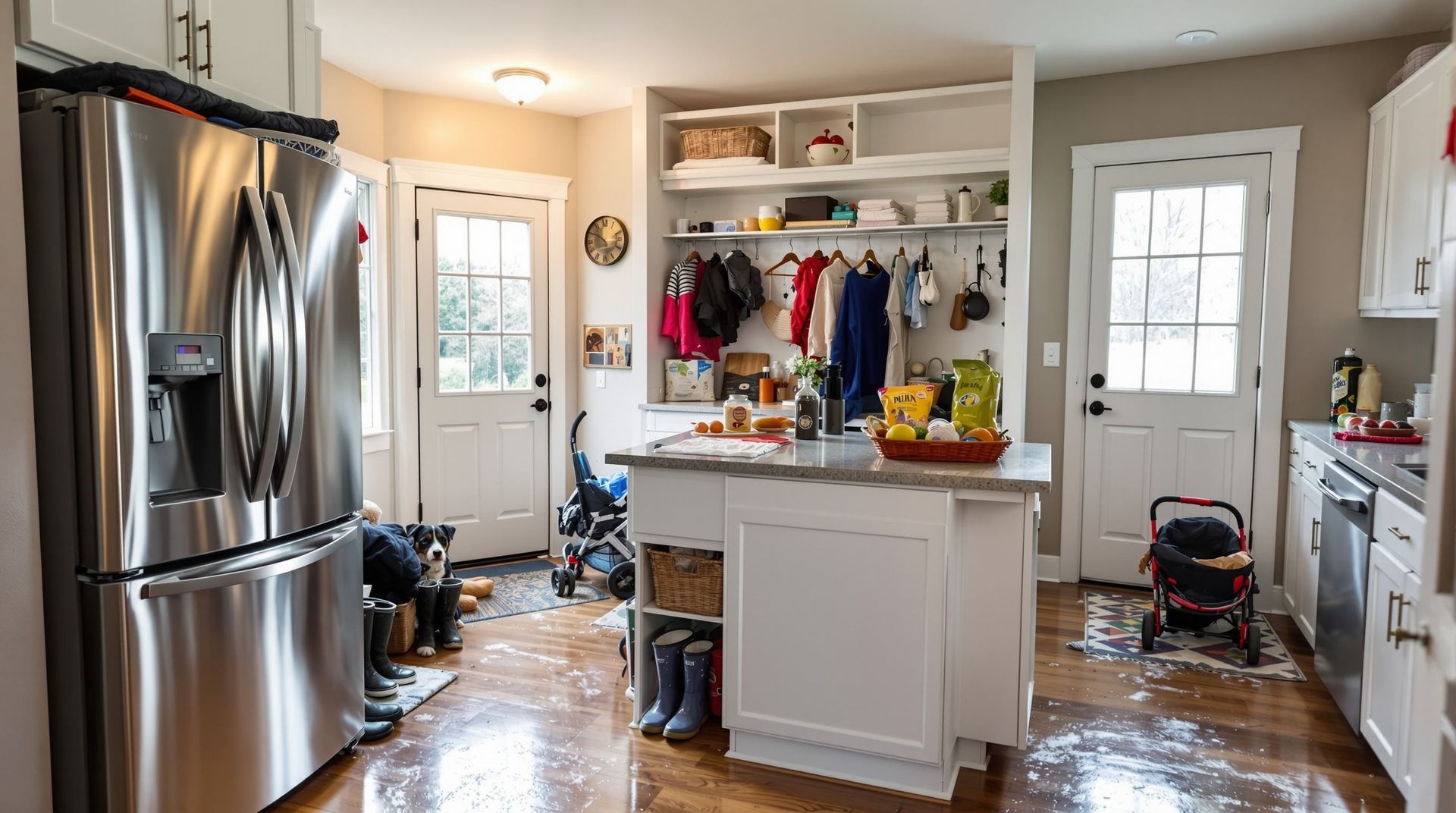
Quick Take: Poor kitchen layouts create daily frustration and often lead to costly changes during a remodel. In Greater Cincinnati homes, fixing traffic flow, spacing, and storage early prevents problems once construction begins. Most local kitchen remodeling projects range from $25,000 to $60,000 and take about 6 to 10 weeks when the layout is planned correctly from the start.
Many homeowners focus on style during a kitchen remodel, but layout is what determines how the space actually works. You feel layout problems every day when walkways are tight, appliances are in the wrong place, or cooking tasks take more steps than they should. In many Greater Cincinnati homes, older layouts no longer match how families use the kitchen today.
In this post, we will cover the layout errors that most often ruin a kitchen's functionality, the exact clearance measurements you need for a kitchen island, why the classic "work triangle" still matters, and how to plan landing zones to keep your cooking area safe.
Why Layout Matters More Than Finishes
Most homeowners focus on cabinets, countertops, and colors, but layout determines how the kitchen actually works. A beautiful space still feels frustrating if the refrigerator blocks a walkway or if two people cannot move around each other. Function issues show up quickly during everyday routines like cooking, unloading groceries, or cleaning up after dinner.
Many homes in the Greater Cincinnati area were built between the 1960s and 1990s, when kitchens were smaller and designed for one cook. Today’s households use the space differently. Families gather, kids grab snacks, and guests often move through the kitchen during gatherings. Without thoughtful workflow design, these activities create congestion and slow everything down.
We see this often during planning. Homeowners tell us their kitchen looks fine but feels cramped or inefficient. The problem is rarely the size of the room. It is how the space is arranged and how people move through it.
Below are the most common kitchen layout mistakes that can hurt function and create daily frustration.
1. The Island That Blocks Your Traffic Flow
Everyone wants a kitchen island, but forcing one into a narrow room is a recipe for disaster. We frequently see this in Hyde Park brick colonials, where the original footprint is tighter than modern open-concept plans. If your island cuts into your walkways, you create a permanent bottleneck.
You need a minimum of 42 inches of clearance between your island and the surrounding countertops for a one-cook kitchen. If two people cook together often, that clearance should increase to 48 inches. Anything less than 36 inches is a code violation and a daily headache.
When you open the dishwasher or oven door, you shouldn't have to squeeze sideways to get past it. If your space is too narrow, a peninsula or a rolling cart often provides better function without stopping traffic.
2. Breaking the "Golden" Work Triangle
The concept of the "work triangle" has evolved, but the physics of cooking haven't changed. You still need an efficient path between your three main work zones: the sink, the refrigerator, and the cooktop.
When these three points are too far apart, you exhaust yourself walking back and forth just to make a sandwich. If they are too close, you end up elbowing your partner while trying to rinse vegetables.
Ideal Triangle Measurements:
- Leg Length: No single leg of the triangle should be less than 4 feet or longer than 9 feet.
- Total Distance: The sum of all three legs should be between 13 and 26 feet.
If the legs are too short, your kitchen will feel cramped, and cooks will constantly bump into each other. Proper kitchen design balances these distances to create a workspace that feels intuitive and efficient. At Howard's Kitchen Studio, we measure these paths precisely to ensure you aren't taking unnecessary steps during your busy evenings.
3. Ignoring Appliance Door Swings and Collisions
One of the most frustrating surprises for a homeowner is realizing that their new appliances collide with each other or the cabinetry. This is a common pitfall in DIY designs that don't account for the full depth of modern appliances.
The Corner Trap
A classic mistake is placing a range or dishwasher directly adjacent to a corner. If you don't include a filler strip (a small spacer piece of wood), the door of the appliance may bang into the handle of the perpendicular drawer or cabinet door.
The Refrigerator Wall
We frequently see refrigerators placed at the very end of a cabinet run, right up against a wall. While this looks neat, it often prevents the refrigerator door from opening past 90 degrees. This means you cannot pull out the crisper drawers or deli trays for cleaning. To fix this, we always design a few inches of filler or a narrow pull-out pantry between the fridge and the wall to allow for a full door swing.
4. Neglecting Countertop Landing Zones
Safety in the kitchen is just as important as aesthetics. A functional layout includes "landing zones" or open countertop spaces immediately adjacent to your major appliances.
Imagine taking a heavy, 400-degree roasting pan out of the oven. If you have to walk four steps across the room to find a place to set it down, you increase the risk of burns and spills.
Essential landing zones:
- Near the Cooktop: You need 12 to 15 inches of space on both sides of your range. This gives you room for ingredients waiting to go into the pot and a place to move a hot pan off the burner.
- Near the Refrigerator: You need roughly 15 inches of counter space on the handle side of the fridge. This allows you to load and unload groceries without juggling items.
- Near the Sink: This is your primary prep area. Aim for 24 to 36 inches on one side and at least 18 inches on the other.
When we plan a kitchen remodeling project, we map out exactly where you will set down hot items, dirty dishes, and grocery bags to ensure the space supports your natural movements.
5. Inefficient Cabinet Placement and Organization
Tall pantry cabinets look impressive, but placing them in the middle of a counter run breaks up your continuous work surface. It creates a visual block and reduces the usable prep area. It is usually smarter to group tall cabinets like pantries and wall ovens at the end of a cabinet run.
Similarly, consider how you use your kitchen cabinets daily. A common error is placing the dishwasher far from the dish storage. You end up walking across the kitchen with stacks of clean plates.
Store heavy items like mixers in lower pull-out drawers rather than high shelves. Place spices and oils near the cooking surface, not across the room. Modern workflow design focuses on "point of use" storage, keeping tools exactly where they are needed most.
6. Neglecting the Vertical Storage Potential
In many standard Cincinnati ranch homes, kitchens are not huge. When horizontal floor space is limited, you must look up. A common layout mistake is stopping wall cabinets 12 inches below the ceiling.
This leaves a "dust catcher" gap that serves no purpose. By taking your cabinets all the way to the ceiling, you gain valuable storage for seasonal items like holiday platters or the giant turkey roaster you only use once a year.
Top benefits of ceiling-height cabinetry:
- Visual Height: It draws the eye upward, making a small room feel taller and more spacious.
- Maximized Storage: You gain roughly 15% more storage volume in the same footprint.
- Less Cleaning: You eliminate the greasy dust that collects on top of standard cabinets.
If the ceiling is extremely high (over 9 feet), we often suggest stacked cabinets with glass fronts for display items to keep the look light and airy.
Why Professional Workflow Design Prevents Costly Changes
Changing your layout after construction starts is the fastest way to blow your budget. Moving plumbing or gas lines mid-project can cost thousands, which is why finalizing your workflow design before demolition begins is important.
We analyze your specific habits and your home's structural constraints to solve problems on paper, not on the job site. This holistic planning prevents expensive surprises and allows us to align your kitchen update with future projects, like a bath remodel , ensuring your entire home functions seamlessly.
Conclusion
Most kitchen frustrations are not caused by size or style. They come from layout choices that make everyday tasks harder than they should be. Planning the right clearances, storage locations, and workflow from the start helps you avoid costly changes and daily inconvenience. Focusing on how the space will be used each day will help ensure your new kitchen feels comfortable, efficient, and easy to live with for years to come.
Stop guessing about clearance widths and door swings. Bring your measurements or rough sketches to one of our showrooms. Contact us today, and let's build a kitchen you will love using for the next 20 years.